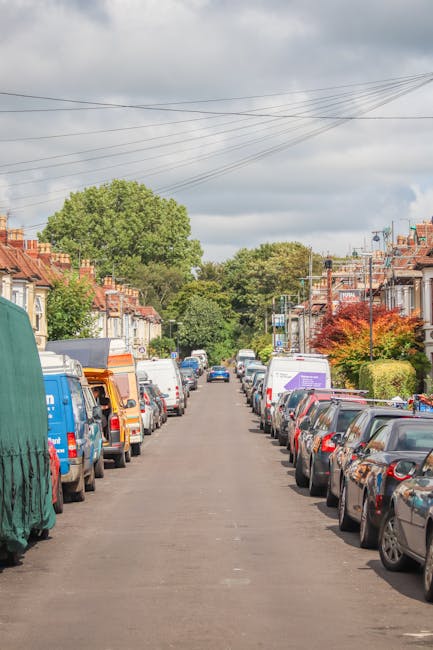
Parking permits for removals Barking and Dagenham Council: a practical guide for a smoother moving day
Moving house or office in Barking and Dagenham can feel straightforward right up until the van arrives and you realise the nearest legal parking space is a little too far away. That is where Parking permits for removals Barking and Dagenham Council become part of the plan. If you are arranging a local move, whether it is a flat, a family home, or a small commercial job, parking is not just a side issue. It can decide how quickly the load is carried, how much lifting is needed, and whether the day feels calm or chaotic.
This guide explains what parking permits are used for, why they matter, how removals teams usually approach them, and the common mistakes people make when they leave parking too late. You will also find a simple step-by-step checklist, a comparison table, and a realistic example from a typical Barking and Dagenham moving day. Let's keep it practical. No fluff.
Expert summary: the best moving days are rarely the ones with the fanciest van. They are the ones where parking, access, timing, and permissions were sorted before a single box was lifted.
Table of Contents
- Why Parking permits for removals Barking and Dagenham Council Matters
- How Parking permits for removals Barking and Dagenham Council Works
- Key Benefits and Practical Advantages
- Who This Is For and When It Makes Sense
- Step-by-Step Guidance
- Expert Tips for Better Results
- Common Mistakes to Avoid
- Tools, Resources and Recommendations
- Law, Compliance, Standards, or Best Practice
- Options, Methods, or Comparison Table
- Case Study or Real-World Example
- Practical Checklist
- Conclusion
- Frequently Asked Questions
Why Parking permits for removals Barking and Dagenham Council Matters
Parking sounds simple until you are trying to reverse a removal van into a busy residential street with double yellow lines, school traffic, narrow kerbs, and a neighbour who has already parked a little too close to your gate. In that setting, a parking permit or temporary loading arrangement is not a nice extra. It is what keeps the move moving.
In Barking and Dagenham, as in many London boroughs, controlled parking areas can affect where a van can stop, how long it can stay, and whether it can legally load close to the property. If a removals crew has to park across the road or at the far end of the street, every box, mattress, and sofa becomes a longer carry. That eats time. It also increases the risk of damage, trip hazards, and general stress. Truth be told, most moving day headaches start with access, not with packing.
There is also the money side. Parking mistakes can lead to penalties, wasted labour time, or a rescheduled move. If you are using a professional team such as man with van removals or a full-service crew from removal services, the vehicle still needs a sensible place to stand. A permit, bay suspension, or clear loading arrangement can make the whole process feel far more controlled.
For local moves, parking planning matters even more because the vehicle may need to return to the same road several times. Think of multi-trip flat moves, office relocations, or homes with lots of fragile items. The closer the van is to the entrance, the quicker and safer the work usually is. Simple as that.
How Parking permits for removals Barking and Dagenham Council Works
Parking permits for removals are usually about giving a removal vehicle legal access to load or unload near a property. Depending on the street and the kind of parking controls in place, this may involve a permit, a bay reservation, or some other temporary parking arrangement. The precise method can vary, so it is wise to confirm the details directly with the council or the relevant parking team well ahead of moving day.
In practical terms, the process usually starts with identifying where the van or truck will need to stop. That means checking whether the street has resident bays, pay-and-display bays, loading restrictions, yellow lines, or access limitations. Then the moving date and time are matched against the local rules. If a permit is required, it should be arranged in advance rather than assumed. Movers often underestimate how much time this can save. Or lose, if it is ignored.
Some removals jobs are simple. A small van can pull up briefly, load, and leave without issue. Others are not. If you are moving from a top-floor flat, a narrow street, or a property with no driveway, the parking arrangement becomes part of the job itself. That is why many customers ask for support from man and van or house removals providers who understand local access issues and can plan around them.
One useful rule of thumb: if the van cannot safely stop within a sensible carrying distance of the entrance, expect the move to take longer. If the vehicle is larger, that effect is amplified. A moving truck needs even more room to manoeuvre, which is why moving truck access should always be checked in advance.
What usually needs checking
- Whether the street is controlled parking only
- Whether loading is allowed at the planned time
- Whether the vehicle can stop close enough to the entrance
- Whether neighbours' cars, bins, or roadworks might block access
- Whether a permit is needed for the removals vehicle itself
- Whether the building has a lift, service entrance, or rear access
It may sound a bit bureaucratic, yes. But once it is sorted, the rest of the day tends to feel far less frantic.
Key Benefits and Practical Advantages
The main advantage of dealing with parking permits early is obvious: the move becomes easier. But there are a few less obvious benefits too.
1. Faster loading and unloading
When the vehicle can park close by, the crew spends less time walking and more time moving. That often reduces the total job time, especially for heavier furniture.
2. Lower risk of damage
Long carries across pavements, steps, and tight entrances increase the chance of scuffs, bumps, and dropped items. Shorter access usually means cleaner handling.
3. Less stress for everyone
There is nothing quite like watching a sofa get stuck halfway down a street because the van cannot stop legally where you expected. Good parking planning prevents that awkward moment.
4. Better coordination with your removal team
A crew that knows the parking setup in advance can bring the right vehicle, equipment, and manpower. That is especially useful if you are booking packing and unpacking services alongside the move.
5. Reduced chance of delays and extra costs
If a van has to park farther away or circle the block looking for a space, the schedule can slip. Even a small delay can ripple through the rest of the day.
6. Better fit for bigger or more complex moves
Office relocations, business stock transfers, and multi-room homes often need more than one loading run. In those cases, parking becomes a quiet but crucial part of the project. If you are handling a business move, office removals planning should include access and parking from the start.
Who This Is For and When It Makes Sense
Parking permits are not only for huge house moves. They matter any time the vehicle needs a legal, practical place to stop near the property. That includes:
- House moves on streets with restricted parking
- Flat moves with shared access or no private driveway
- Student moves in busier residential areas
- Office or shop relocations in built-up high streets
- Furniture pick-ups where items are bulky or awkward
- Moves involving a large removal van or truck
It also makes sense when the property has a narrow frontage, a steep driveway, or awkward corner access. You know the sort of place: the one that looks fine on a map, but in reality there is a lamppost, a bend, and a row of parked cars all competing for the same space. Not ideal.
If you are booking a smaller local job, a man with a van service may be enough. For bigger family homes or combined services, a broader home moves package can make sense because it allows the team to plan the vehicle, loading point, and time window together.
In our experience, people often assume parking only matters on busy roads. In fact, quiet roads can be just as tricky if neighbours park tightly or if there is limited turning space. The calmest-looking street can still be a headache at 8:00 a.m. on a weekday.
Step-by-Step Guidance
Here is a practical way to approach Parking permits for removals Barking and Dagenham Council without overcomplicating it.
- Check the moving property and street layout. Look at the closest legal stopping points, any bay markings, nearby junctions, and whether the vehicle needs to reverse in or out.
- Identify parking controls early. Do not wait until the night before. Controlled bays, loading restrictions, and time limits can change the whole plan.
- Decide what vehicle is likely to be used. A small van, removal van, or truck may have different space needs. If you are not sure, ask your removals provider what they recommend.
- Confirm whether a permit or temporary arrangement is needed. If the vehicle cannot legally stop where required without approval, sort the permission well ahead of time.
- Build the permit into the moving schedule. This is the bit many people miss. The permit must match the day, time, and duration of the work.
- Share the access details with the moving team. Tell them about steps, narrow entrances, road restrictions, lift access, and any loading difficulties. Small details matter.
- Prepare the building and belongings. Make sure boxes are labelled, furniture is broken down where possible, and the front path is clear.
- Have a backup plan. If the street is blocked or the parking spot is taken, know the next best legal place to stop.
That sounds like a lot, but once you break it into steps it becomes manageable. A good removals company will help with most of this. If you are comparing providers, you can also review pricing and quotes early so parking-related logistics are properly factored in.
Expert Tips for Better Results
A few small habits can make a big difference.
- Book parking arrangements earlier than you think. Last-minute requests are where stress creeps in.
- Measure the carrying distance. Even rough estimates help. Fifty metres feels fine on paper; it feels very different with a wardrobe in your hands.
- Use the smallest suitable vehicle. Bigger is not always better if the street is tight.
- Check for events, bin collections, and roadworks. These can quietly ruin an otherwise good plan.
- Keep one person in charge of access. Too many helpers guessing can make things messier, oddly enough.
- Leave a little time buffer. Even a 15-minute cushion can help when a loading bay is occupied.
One slightly old-school tip: walk the route from the van to the front door before the team starts lifting. You will spot the tiny trip hazards, the loose gravel, the gate that only opens halfway, and the annoying corner where everyone has to squeeze. It is a five-minute job that can save a lot of grumbling later.
If you want a provider that is used to local access quirks, browsing removal company options can help you compare service levels rather than just price. Price matters, of course, but so does competence. Especially when parking is tight.
Common Mistakes to Avoid
Most parking problems are not dramatic. They are small misses that stack up. The good news is they are easy to avoid once you know what to watch for.
- Assuming a van can "just stop for a minute". In controlled parking areas, that assumption can be expensive.
- Leaving parking until moving day. By then, you are reacting instead of planning.
- Booking the wrong vehicle size. A large truck may be unnecessary, but a small van may mean too many trips.
- Forgetting about unloading time. It is not only about arrival. The van may need the space for longer than expected.
- Not telling the removals team about access issues. If they only find out on arrival, everyone loses time.
- Ignoring neighbours' parking patterns. Some streets get busy early, and a space can disappear fast.
Another classic one: people pack brilliantly, label every box, and then forget to make room for the van. It happens more often than you would think. A neat hallway is lovely; a clear driveway is better.
And yes, sometimes the "obvious" spot turns out not to be obvious at all once a delivery lorry is there and the school run starts. Funny how that works.
Tools, Resources and Recommendations
You do not need a complicated toolkit for this. What you need is a simple, organised way to collect the right information and share it with your movers.
Useful things to prepare
- A written moving date and time
- The full moving address and postcode
- Notes about parking restrictions or permit needs
- Photos of the street, if helpful
- Information about stairs, lifts, or rear access
- A list of bulky items such as wardrobes, beds, sofas, or office furniture
If you are arranging a household move, house removals and house movers pages can help you understand what a fuller service may include. If you are moving a few key items rather than a whole property, furniture pick up can be more appropriate.
For comparison, some people only need a quick van-and-driver service, while others need packing help, dismantling, loading support, and a second run. The right choice depends on volume, access, and timing. Not the fancy wording, just the reality of the day.
| Scenario | Likely parking need | Best approach |
|---|---|---|
| Small flat move with light furniture | Short loading stop close to the entrance | Small van, confirm local restrictions, keep schedule tight |
| Family home with multiple rooms | Longer access near the property | Removal van or truck, parking plan built in from the start |
| Office relocation with desks and files | Designated loading space or nearby legal stop | Advance access planning, clear loading sequence, coordinated team |
| Single-item furniture collection | Very brief but legal stopping point | Check whether kerbside loading is allowed and safe |
Law, Compliance, Standards, or Best Practice
This topic sits in the practical world of local parking control, road use, and safe loading. Because of that, it is best handled carefully. Rules may change depending on the street, time of day, parking zone, and the type of vehicle involved. So while the general principle is straightforward - park legally, load safely, and keep access clear - the exact permission required should always be checked for the specific move.
Good practice also matters. Even where a vehicle is permitted to stop, it should not block sightlines, create a hazard for pedestrians, or make it difficult for residents and emergency access. That is especially relevant on narrow roads and in dense residential streets.
From an operational point of view, a reliable removals team should treat parking as part of the job, not an afterthought. That includes planning the route, advising on vehicle size, and making sure the move does not rely on guesswork. If you are reading service information, it is worth checking pages such as health and safety policy and insurance and safety so you understand how the company approaches risk and responsibility.
For businesses, the same thinking applies. A commercial move should include loading access, staff safety, and building rules. If the job is more involved, commercial moves and office relocation services are worth reviewing before a date is fixed.
Options, Methods, or Comparison Table
There is usually more than one way to handle parking on moving day. The right choice depends on the street, the vehicle, and how much is being moved.
| Option | Best for | Advantages | Drawbacks |
|---|---|---|---|
| Standard legal parking nearby | Quiet roads and light moves | Simple, low fuss | May be too far for heavy or large items |
| Temporary permit or approved loading access | Controlled streets and tighter access | Closer vehicle access, smoother loading | Needs planning and confirmation in advance |
| Smaller vehicle instead of a large truck | Narrow streets and short moves | More flexible parking, easier manoeuvring | May require extra trips |
| Full removals service with access planning | Busy households or office relocations | Less stress, more coordination | May be more involved than a simple van hire |
To be fair, there is no universal winner. A smaller vehicle sounds convenient until the third trip. A bigger truck sounds efficient until it cannot get near the door. The smartest option is usually the one that fits the street, not just the inventory.
Case Study or Real-World Example
Here is a realistic example based on a common kind of Barking and Dagenham move.
A couple are moving from a two-bedroom flat on a street with limited parking. They have a sofa, bed frames, boxes of books, a dining table, and several awkward items that do not carry well over long distances. At first, they think a van can stop outside "for a few minutes". But when they check the street properly, they realise resident bays are busy by morning and the closest legal stop is not right by the building.
Instead of leaving it to chance, they speak to their removals provider early. The team recommends a vehicle size that balances capacity and manoeuvrability, and the couple keeps the move time flexible enough to work around local parking conditions. They also clear the hallway, label all boxes, and tell the neighbour about the likely loading period. Nothing glamorous. Just good planning.
On the day, the van parks in the nearest legal place, the lifting route is short, and the move is done without the usual panic. No heroic story. No drama. Just fewer steps, less back-and-forth, and a lot less noise on the stairwell. That is often what a good parking plan looks like in real life.
Practical Checklist
Use this checklist before moving day. It is simple, but it covers the bits that usually matter most.
- Confirm the moving date and time
- Check parking controls at both addresses
- Identify whether a permit or loading arrangement is needed
- Choose the most suitable vehicle size
- Tell the removals team about stairs, lifts, and access limits
- Clear the route from the property to the vehicle
- Warn neighbours if space will be tight
- Prepare bulky items and dismantle furniture where sensible
- Keep key documents, keys, and essentials separate
- Have a backup parking option in mind
Quick takeaway: if the van can park legally and close enough to the entrance, the rest of the day becomes much easier. That one detail can change the whole tone of a move.
Conclusion
Parking permits for removals in Barking and Dagenham are really about control, not paperwork for the sake of it. When access is sorted early, the moving team can focus on what matters: getting your belongings out safely and into the new place without unnecessary detours, delays, or stress.
If you remember only one thing, make it this: parking is part of the move. Treat it as seriously as packing, and your moving day will usually feel steadier from the first box to the last.
Get a free quote today and see how much you can save.
And if you want to understand more about the company behind the service, you can also review the about us page, along with the available removals support options. Sometimes the calmest move is the one that was planned with a bit of care upfront.
Frequently Asked Questions
Do I need a parking permit for removals in Barking and Dagenham?
It depends on the street, the parking controls in place, and where the removals vehicle needs to stop. In some situations, a permit or other temporary arrangement may be needed to load legally and safely.
Can a removals van stop outside my house for a few minutes without a permit?
Not always. Even a short stop can still count as parking or loading in a restricted area. It is safer to check the local rules rather than assume a quick stop will be fine.
How early should I sort out parking for moving day?
As early as possible. Parking issues are easiest to solve before the date is fixed. Leaving it until the last minute often means fewer options and more stress.
What if my street is very narrow?
A narrow street usually means access planning becomes even more important. A smaller van may be better, or the move may need a clearer loading plan. Tell the removals company in advance so they can advise properly.
Does a house move need different parking planning from an office move?
Yes, usually. House moves often involve stairs, furniture, and family routines, while office moves may need loading coordination, timing windows, and building access rules. The parking solution should fit the job.
Can the removals company help with parking arrangements?
Many can help guide the process, especially if they work locally and understand typical access issues. Still, you should confirm the exact parking requirements for your address rather than leaving it entirely to guesswork.
What happens if another car is in the parking space on moving day?
That is one of the most common headaches. A backup legal stopping point helps. If the street is busy, it is sensible to have a plan B before the crew arrives.
Is it better to hire a small van or a larger removal truck?
It depends on volume and parking access. A larger truck may reduce trips, but a smaller vehicle can be easier to place on tight streets. The right choice is the one that fits the property and the road.
Should I mention parking problems when asking for a quote?
Absolutely. Access issues can affect the vehicle size, time required, and overall moving plan. Being upfront helps the quote reflect the real job.
What if I am only moving one or two pieces of furniture?
Even a small furniture move can need parking thought, especially if the item is bulky or awkward. A quick check on stopping restrictions can save a lot of hassle for a seemingly simple job.
How do I make moving day less stressful?
Keep the route clear, sort parking early, label boxes, and share the access details with your movers. That combination does more for peace of mind than people usually expect.
Where can I compare moving options if I am not sure what I need?
Start with the service pages that match your move size and complexity, such as man with van, removal van, or movers. That should help you narrow down the right fit without overcomplicating things.